
The Art of Layering Scent
How to build a personal scent in layers — with a clear order of operations, seasonal notes, and the mistakes to avoid.
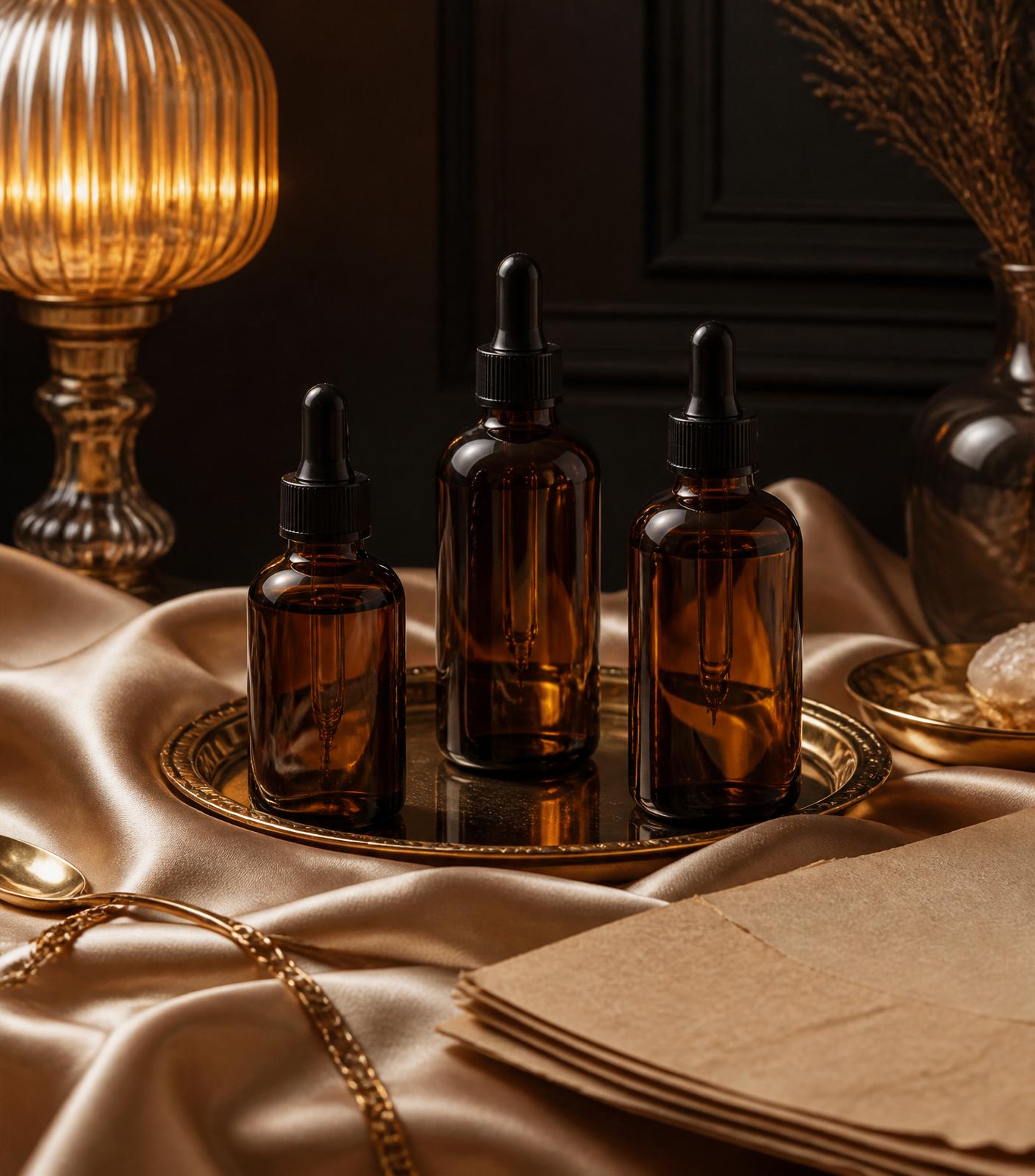
Layering fragrance is one of the oldest habits in Arabian perfumery, and one of the most misunderstood ideas in modern beauty. Done well, it lets you build a scent that reads like yours alone — deeper, more personal, more considered than any single bottle can be.
Done badly, it becomes a wall of competing perfumes. This is a short field guide to the difference.
“The most beautiful layering is the kind no one else notices you did.”
The order of operations
The single most useful rule in layering is: heaviest first, lightest last.
1. Body oil or perfumed body elixir — smoothed over shoulders, décolletage, forearms and legs. This is your base coat. It hydrates the skin and gives every layer above it a longer stay.
2. Attar or concentrated perfume oil — one small trace at each pulse point (inside wrist, base of throat, behind the ear). This is the heart of your composition.
3. Alcohol-based fragrance — a light mist above the collarbone, or into the air in front of you as you walk through it. This is the projection layer.
Reversing the order — spray first, then oil — smothers the top notes of the spray and wastes it.
Stay inside one family (until you know the rules)
Perfumery loosely groups scents into families: fresh, floral, oriental / amber, woody, chypre, gourmand. When you are starting out, keep every layer inside the same family.
A warm-amber base under a warm-amber attar under a warm-amber spray will read as one deep, considered scent. The same base under a fresh citrus spray will read as an argument.
Once you know your own nose, you can start deliberately breaking this — a floral heart under a woody spray, for instance — but treat that as an intermediate move, not a starting point.
Two layers is usually enough
Most well-layered scents you admire on other people are two layers, not four. A body oil plus one attar. Or a body oil plus one spray. That is it.
Every additional layer multiplies the risk of one note dominating in a way you did not intend. If you catch yourself reaching for a third bottle, pause. Nine times out of ten, the composition is finished.
Seasonal layering
Heat amplifies fragrance. In summer, cut your application in half. Skip the alcohol spray on the hottest days and let the body oil carry the scent quietly on skin. Rose, neroli, lighter musks and green notes suit heat better than dense ouds and heavy ambers.
Cold weather is the opposite. Winter air holds fragrance close and slow, which is why classic Arabian compositions — oud, amber, saffron, resinous rose — feel like they were built for it. You can go slightly heavier on the base oil and let the top notes take their time.
Common layering mistakes
Overapplication. Layering is not the same as more. If a friend can smell you across a table, you are already at the ceiling; the person next to you is beyond it.
Rubbing the wrists. Aggressive rubbing crushes the top notes. Press, do not scrub.
Layering on unmoisturised skin. Dry skin does not hold scent. A body oil applied first is doing structural work, not just adding fragrance.
Layering two loud fragrances. If both of your layers are meant to be the star, neither will be. Choose a lead and a supporting layer, always.
Chasing a fresh top note that has already faded. Fragrance changes on skin. What smells 'wrong' at hour one may be exactly right at hour three. Give it time before you correct it.
A simple layering starter
If you are new to this, try one composition consistently for a week before you change anything.
Base: an unfragranced or lightly perfumed body oil, applied after your shower while skin is still warm.
Heart: a single trace of one attar or perfume oil at each wrist and at the base of the throat.
Optional finish: on days you want more projection, a single spray of a fragrance in the same family, misted above the collarbone.
That is a full, considered scent — and it will teach you more about layering than any list of rules.
Combinations that reliably work
A short list of pairings that almost always read well, organised by scent family. Treat these as scaffolding, not rules.
Warm oriental base: a rose-and-oud body oil under an amber-forward attar. Deep, resinous, unmistakably Arabian. Excellent in cold weather and at night.
Soft floral base: a rose or jasmine body oil under a musk-and-sandalwood attar. Quiet, intimate, closer-to-skin. Reads elegant in a professional setting.
Woody base: a sandalwood or cedar body oil under a light oud or vetiver attar. Dry, grounded, faintly smoky. Works year-round.
Gourmand-adjacent base: a vanilla-and-benzoin body oil under an amber-saffron attar. Warm, honeyed, softly sweet without turning dessert-like.
Fresh-clean base: a neroli or bergamot body oil under a light musk. Comfortable in heat, easy in the office, forgiving on almost any skin.
A simple beginner formula
If you want a single, safe framework you can return to, use this one:
One base + one heart + optional finish. Choose a body oil whose scent you already like. Choose one perfume oil or attar in the same family. Skip the spray on most days; add it only when you want extra projection.
That is it. Wear that combination for a full week before you change anything. You will learn more about how your skin holds fragrance from seven consistent days than from seven different experiments.
Troubleshooting: when a layered scent smells muddy
If a combination reads unclear or heavy, the diagnosis is almost always one of four things.
Too many layers. Strip back to two. If you were wearing three or four, one of them is fighting the others.
Two lead notes. If both your base and your heart are trying to be the star (two roses, two ouds, two ambers), they will cancel rather than compose. Keep one lead and let the other support.
Wrong order. If you sprayed first and oiled second, the spray is trapped under the oil and smells flat. Reapply from a clean start with oil first.
Overapplication. Too much of anything reads as muddy. Wash it back with a damp cloth and unscented moisturiser, wait, and rebuild with half as much.
Frequently Asked
- Can I layer any two perfumes together?
- Technically yes, but the results will vary wildly. Start inside one scent family and treat cross-family layering as an intermediate move.
- Should I layer differently in summer versus winter?
- Yes. Cut application in warm weather and lean on lighter notes; let denser oud and amber compositions breathe in cold weather.
- Is body oil really necessary as a base?
- Not strictly, but well-moisturised skin holds fragrance for hours longer than dry skin. A body oil is doing structural work under any layered scent.
- How long should I wait between layers?
- Give each layer at least a minute to settle so the notes do not smother each other. Two minutes is even better.
Be the first to know when the house opens.
A small circle. The occasional letter. No noise.